
An overview of the commercial property market in Westminster
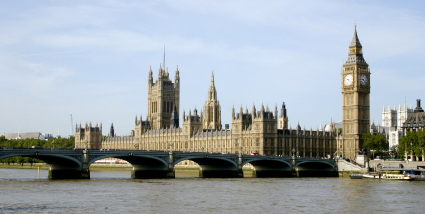 The Westminster economy contributes with almost 10 per cent to the annual GVA of the United Kingdom. Companies that provide professional and businesses services are plentiful in the district, and as a result, the demand for suitable commercial floor space has done nothing but increase over the past 20 years.
Therefore, although the general trend in Westminster evidences a rather weak occupational market, the situation looks favourable when it comes to foreign investment in local commercial properties. Approximately 62 per cent of the total capital invested on properties in this district comes for overseas investors. Average yields are estimated to be set at 4 per cent, a figure that has not changed since 2010.
Lastly, analysts point at the fact that the commercial property market in Westminster requires a very active development pipeline if it is to remain competitive with other areas of the city.
Office space in Westminster
Market analysts at CBRE highlight the reversal in roles that the London office market has seen since 2011. Previously, take-up rates in the City were the highest, followed by moderate rates in Westminster and the West End. However, since last year occupiers in the City have been keen on cutting costs, and as a result, take-up rates have decreased in favour of Westminster, which now has one of the highest rates across the British capital. Take-up rates over the past year have totalled 3.7 million square feet. More than 800,000 square feet have been taken up during the third quarter of 2012 alone.
The majority of the office space taken up over the past year has been Grade B stock, which has experienced a 16 per cent increase when compared to the figures for 2011. This is not surprising considering that the availability of refurbished office space in Westminster exceeds Grade A stock by 1.6 million square feet. The number of office space under offer is also up by 4 per cent against last year's numbers. Vacancy rates are 4.3 per cent.
Prime rents remain stable at £55 per square foot. As for secondary rents, the average currently ranges between £30 and £40 per square foot.
As for future developments, there are 1.7 million square feet of office space scheduled for delivery by the end of 2013.
Retail space in Westminster
The West End district of London is characterised by having one of the largest retail turnovers in the United Kingdom. On average, this district alone generates more retail revenue that Manchester and Birmingham together, so it is not difficult to imagine the large amounts of retail floor space involved. As per the London Plan, retail volumes and floor space demand are set to increase in Westminster, so the area continues to be very attractive to investors.
Current rental values for retail properties in Zone A average £350 per square foot, following a 1.8 per cent increase over 2011. Forecasts for 2013 predict that prime rental costs could rise by a further 4 per cent next year, as long as more suitable space becomes available.
With regards to the investment market, yields average 3.5 per cent. It seems that investors are anticipating an under-supply situation in the short term and are pushing for quick completion of their transactions.
Despite the overall healthy state of the retail property market in Westminster, there are some areas within the district where retail vacancy rates are rather high. These areas are located mainly in the north west of the district and include properties in Harrow Road, Church Street, and Edgware Road.
Industrial space in Westminster
During several years, Westminster's City Council has implemented a policy that aims to protect the limited stock of light industrial space available and to encourage the high numbers of businesses in the creative industries to take up this kind of floor space. The council has encouraged businesses in this area to take up small industrial units with potential for refurbishment, but at the time of writing only 1.5 per cent of the total industrial floor space in Westminster was occupied by companies in this sector.
The lack of success of this council initiative and the fact that sectors that traditionally require industrial floor space (like transport, wholesale, and distribution) only contribute with 5 per cent to the local economy, mean that the industrial property market in Westminster remains virtually inactive, in line with other areas of central London.